Written by Turnkey Siding
Key Takeaways
- Clean wood siding on a Mandeville home with a dilute cleaning solution and a garden hose. The USDA Forest Products Laboratory says you don’t need a pressure washer.
- Oxygen bleach cleaners (sodium percarbonate) are gentler on wood than household chlorine bleach, which can leave a fuzzy surface.
- If you use household bleach, the Forest Products Laboratory suggests starting around 5 parts water to 1 part bleach, and says a mix stronger than 3 to 1 shouldn’t be needed.
- Let the wood dry for several days before you paint or stain. On the Northshore, humid weather can stretch that.
- Turnkey Siding repairs and replaces wood siding across Mandeville and St. Tammany Parish. Free estimates at 504-882-9704.
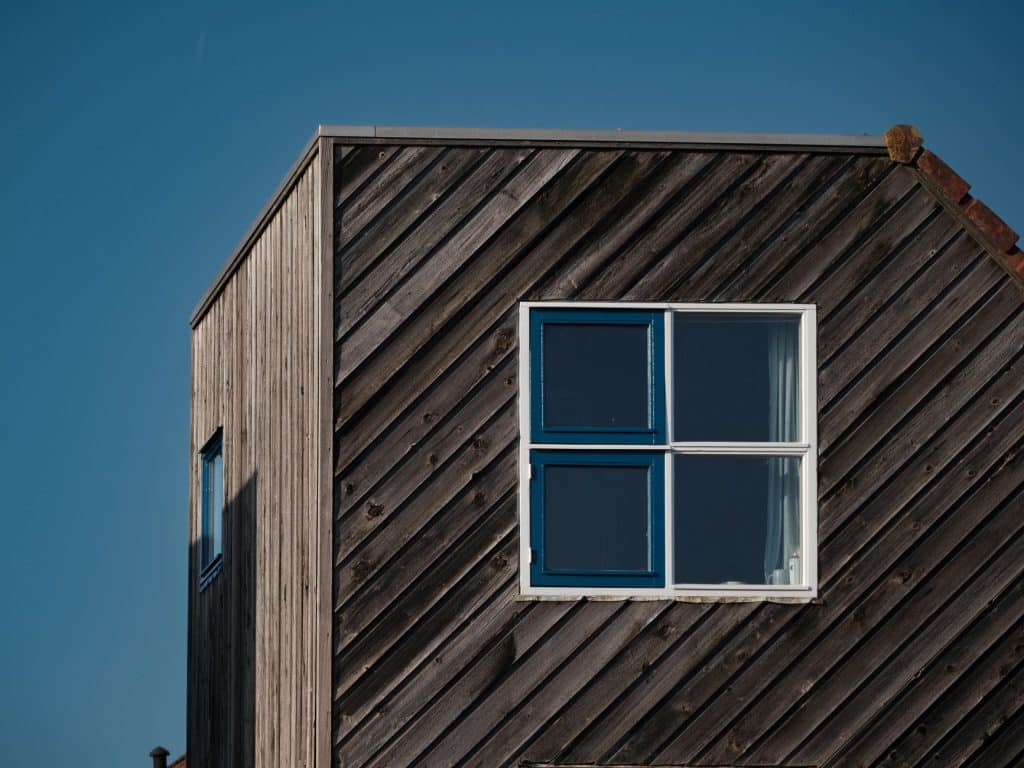
How Do You Clean Wood Siding on a Mandeville Home?
Quick Answer: Wet the wall, apply a dilute cleaner such as an oxygen bleach product or a weak household bleach and detergent mix, keep it wet for about 12 to 15 minutes, and rinse with a garden hose pointed downward. That’s the method the USDA Forest Products Laboratory describes for mold and algae on wood siding. On a Mandeville home, a cloudy day is the best time to do it.
Mandeville sits on the Northshore of Lake Pontchartrain, and plenty of homes here are tucked under tall pines and oaks. The shade is lovely in July. It also keeps walls damp, and damp wood grows mildew and algae. We get calls from Mandeville owners who assume green or black staining means rot. Usually it doesn’t, and a careful wash is the first step.
Does Mildew Damage Wood Siding?
Not by itself. In a lab note on cedar siding maintenance, the Forest Products Laboratory explains that mildew and algae feed on airborne dirt and on oils and extractives in the wood and some finishes. They don’t break down the structural parts of the wood. They just live on the surface.
That matters because the cure can be harsher than the problem. The same lab note warns that bleaching agents kill mold and algae quickly but can also degrade wood, so cleaners should be mixed as dilute as possible. The goal is to remove the growth without roughing up the surface.
Rot is a different story. Soft, spongy wood under the stain is a repair job, not a cleaning job. If you’re weighing whether wood is still the right siding for your house at all, our post on wood siding pros and cons in Louisiana covers the trade-offs.
What Is the Best Cleaner for Wood Siding?
The Forest Products Laboratory lab note recommends commercial cleaners containing sodium percarbonate, also sold as oxygen bleach. They’re gentler oxidizers than chlorine bleach, which the lab note says tends to pulp the surface fibers and leave the wood fuzzy.
If you’d rather use household bleach, the lab note gives a starting point: about 5 parts warm water to 1 part bleach, with a small amount of powdered detergent. For stubborn growth, it suggests 3 or 4 parts water to 1 part bleach, and it says a mix stronger than 3 to 1 shouldn’t be needed.
One safety rule matters more than any recipe. Use a detergent without ammonia. The lab note warns that ammonia and bleach react to form toxic fumes. Wear gloves and eye protection, and wet nearby plants before and after so runoff doesn’t scorch them.
What Are the Steps to Wash Wood Siding?
This is how we’d walk a Mandeville homeowner through it:
- Choose the day. The lab note suggests a cool, cloudy day, or even a gentle rain, so the solution doesn’t dry on the wall.
- Wet the siding. Rinse loose dirt and pollen off first.
- Apply the cleaner. Use a garden sprayer or a soft brush and work in sections.
- Let it sit. Keep the surface wet with the solution for 12 to 15 minutes. Aggressive scrubbing shouldn’t be necessary.
- Rinse downward. Use a garden hose with the stream pointed down, so water runs off the laps instead of into them.
- Wait before refinishing. Give the wood several days to dry before any paint or stain goes on.
Why Skip the Pressure Washer?
The Forest Products Laboratory says plainly that you don’t need a pressure washer for this job. New Orleans’ Historic District Landmarks Commission gives the same advice in its exterior woodwork guidelines: avoid power washers, which can force water into wall cavities and damage decorative details. Its recommended routine is a yearly wash in warm weather using household detergent and a bristle brush, rinsed with a garden hose.
What About Black or Blue Stains Around Nails?
Dark blue-black stains near fasteners usually aren’t mildew. The lab note explains that they often come from iron, such as rust from weathered nails or failed flashing reacting with the wood. Bleach won’t remove them. The lab note says a 5% oxalic acid solution can neutralize iron stains, and it warns that oxalic acid is toxic, so follow the product label closely.
If the stains keep coming back, the source is still there. Rusting nails often mean it’s time to look at the boards around them, too.
How Often Should Mandeville Homeowners Clean Wood Siding?
Once a year works for most Mandeville homes, with shaded walls checked more often. Late spring, after the heaviest pine pollen and before summer storms, is a good window. Our siding maintenance checklist puts the wash alongside the other yearly checks, and our guide to cleaning mold and mildew off siding compares methods across materials.
While you’re up close, look for soft wood and open joints, plus the mud tubes of termites along the lower boards. Our post on Formosan termites and siding explains what those look like.
Older Paint on Mandeville Homes
If your house was built before 1978 and the paint is peeling, don’t scrape or sand it as part of the wash. Paint from that era may contain lead, and the EPA’s renovation rules require certified firms for paid work that disturbs paint in those homes.
Frequently Asked Questions
Can I use the same method on vinyl siding?
Vinyl has its own manufacturer guidance. Our post on cleaning vinyl siding without damage covers it.
Do cedar shakes clean the same way?
The lab note was written for cedar, so the method applies. Shakes have more texture, so let the cleaner work instead of scrubbing. Our comparison of cedar shakes and fiber cement shingles covers upkeep differences.
Is there a lower-maintenance siding that still looks like wood?
Fiber cement and engineered wood both mimic wood. Our fiber cement vs engineered wood guide for the Northshore compares them, and our fiber cement siding page for Mandeville has more.
Does Turnkey Siding work on wood siding?
We install and replace wood siding, and we can look at worn boards and tell you what we’d recommend. See our wood siding service in Mandeville.
Need a Second Look at Your Mandeville Siding?
If a wash turned up soft boards or stains that won’t quit, we’ll take a look and tell you what we see. Turnkey Siding serves homeowners in Mandeville and across the Northshore. Call 504-882-9704 or request a free estimate online.