Written by Turnkey Siding
Key Takeaways
- The cedar shake vs fiber cement shingles decision in New Orleans usually comes down to a gable or accent wall, since that’s where shingles show up on most local houses.
- Real cedar shingles are graded by the Cedar Shake and Shingle Bureau, with No. 1 Blue Label clear heartwood at the top of the scale.
- LSU AgCenter lists fiber cement among termite-resistant materials. Untreated cedar isn’t on that list, so a cedar gable needs inspection access and an active termite plan.
- HDLC guidelines say staff can approve smooth finish fiber cement, and its review table covers replacing wood shingles with smooth finish fiber cement shingles that match.
- Turnkey Siding installs wood and fiber cement across New Orleans. Free estimates at 504-882-9704.
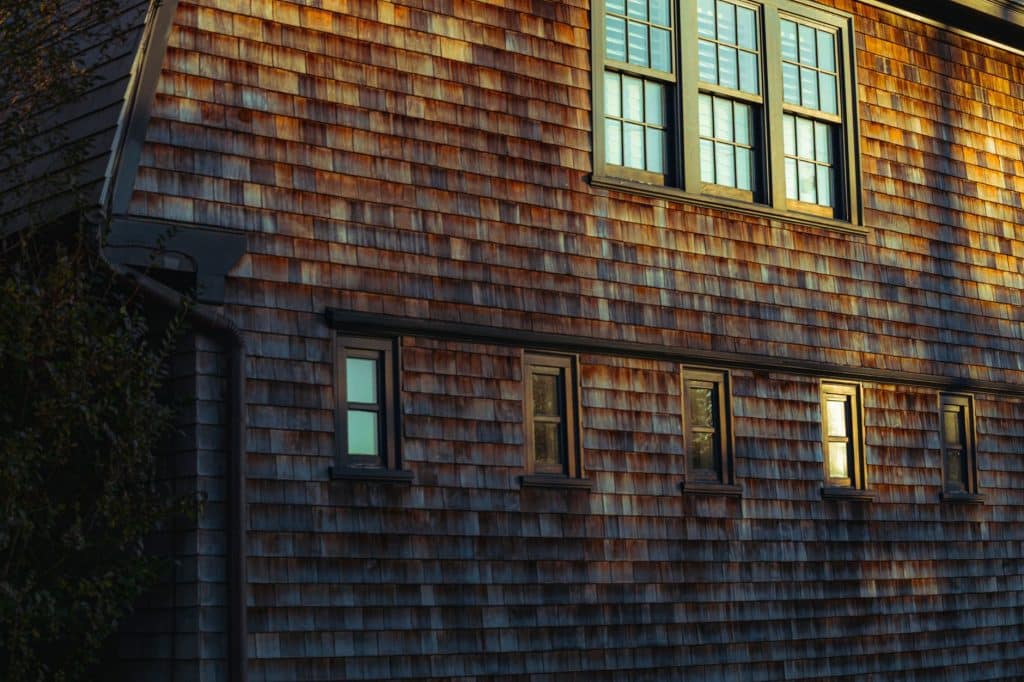
Cedar Shake vs Fiber Cement Shingles: Which Fits a New Orleans Gable?
Quick Answer: Cedar shingles give you real wood grain and the exact look of a historic gable, but they need regular paint or stain and a solid termite plan in our climate. Fiber cement shingle panels copy the look with a product that doesn’t feed termites and that manufacturers say holds paint longer. In a historic district, the answer also depends on what the HDLC will approve for your building. For most accent walls outside a district, fiber cement is the lower-maintenance choice. For a contributing house where the original shingle pattern matters, wood usually wins.
Where Shingles Show Up on New Orleans Houses
The HDLC’s guidelines for exterior woodwork say decorative wood shingles in New Orleans are most often found in the front gables of residential buildings. The common cut patterns include fishscale, diamond, staggered, octagonal, and sawtooth. Look up at the front gable of an older New Orleans house, whether it’s a shotgun or a bungalow, and that’s where shingles tend to be. Our post on siding a shotgun house in New Orleans covers the rest of the wall on those homes.
Shingles and shakes aren’t quite the same thing. Shingles are sawn to a uniform, smooth profile. Shakes are cut thicker. On a gable, most people use “shake” loosely for either one, and the cut pattern matters more to the look than the label does.
What You Get With Real Cedar
The Cedar Shake and Shingle Bureau grades red cedar shingles for walls and roofs:
- No. 1 Grade, Blue Label: clear heartwood with 100 percent edge grain and no defects. The Bureau describes it as the premium grade.
- No. 2 Grade, Red Label: a clear face with limited sapwood and flat grain allowed, and limited knots above the clear portion.
- No. 3 Grade, Black Label: a shorter clear face, with unlimited sapwood and flat grain.
- Undercoursing Grade: a utility grade used only as the under layer on double-coursed sidewalls.
For a visible gable, the grade you pick shows. Knots and sapwood take paint and stain differently than clear heartwood.
Cedar in New Orleans Humidity
New Orleans humidity is hard on any wood finish, for the reasons in our post on how Louisiana humidity damages siding. The HDLC’s woodwork guidelines say a high quality paint job can last 5 to 8 years, and they recommend inspecting exterior wood twice a year and cleaning it with a garden hose and mild detergent, not a power washer. Power washers can force water into wall cavities. Our guide to wood siding pros and cons in Louisiana goes deeper on species and upkeep.
Cedar and Formosan Termites
LSU AgCenter’s list of termite-resistant materials includes treated wood products and fiber cement. Untreated cedar isn’t on it. In a city with Formosan termites, a cedar gable needs a current termite contract and a clear view of any pathways up the wall. Our post on Formosan termites and siding in New Orleans explains what we look for.
What You Get With Fiber Cement Shingles
James Hardie’s Hardie Shingle siding is one option, and our look at James Hardie siding in New Orleans covers the brand more broadly. The company describes it as mimicking the look of classic cedar shake and offers it as straight edge and staggered edge panels. James Hardie says its siding resists moisture damage and holds no appeal for termites, and it lists a 30-year limited substrate warranty that it describes as non-prorated and transferable. It’s also offered with factory ColorPlus finishes, which we compare with field painting in our post on ColorPlus vs painted fiber cement in Louisiana.
Each panel covers more wall than a single shingle, which helps keep courses straight across a wide gable. The trade-off is pattern. If your gable has fishscale or sawtooth cuts, check whether the fiber cement product you’re considering comes in that pattern before you plan on it.
Even with fiber cement, LSU AgCenter’s advice still applies: termite-resistant materials don’t stop termites from finding hidden pathways to untreated wood. Leave inspection clearance where the wall meets the ground and keep the flashing detail clean at the gable.
What the HDLC Allows on Historic Gables
If your house is in an HDLC local historic district, the review decides a lot. The HDLC’s woodwork guidelines prefer repairing and replacing wood in kind. They also note that fiber cement made in sizes and shapes similar to wood siding and shingles, with a smooth painted finish, can be compatible with historic fabric. Staff can approve smooth finish fiber cement siding, while wood-grained fiber cement can be appealed to the Commission. The review table specifically addresses replacing wood siding or shingles with smooth finish fiber cement siding or shingles that match the existing ones.
Get the approval before ordering materials. Our post on siding colors and historic district rules in New Orleans explains how HDLC review fits into a project schedule.
A Side-by-Side for New Orleans Gables
- Look: Cedar gives real grain and every decorative cut. Fiber cement panels offer straight and staggered looks with a painted finish.
- Termites: Fiber cement is on LSU AgCenter’s termite-resistant list. Untreated cedar is not.
- Upkeep: Painted wood needs a repaint cycle the HDLC puts at 5 to 8 years for a quality job. Manufacturers say fiber cement holds paint longer, and factory finishes skip field painting.
- Historic review: Wood in kind is the safe path. Smooth finish fiber cement is the version HDLC staff can approve.
Frequently Asked Questions
Are cedar shakes a good idea in New Orleans?
They can be, with a quality grade and an active termite contract. They make the most sense where the original wood look matters.
Do fiber cement shingles look like real cedar?
From the street, a painted fiber cement shingle panel reads close to painted wood shingles. Up close, and on fancy cut patterns, the difference is easier to spot.
Will the HDLC approve fiber cement shingles on my gable?
HDLC guidelines say staff can approve smooth finish fiber cement, and wood-grained versions can be appealed to the Commission. The decision is made per application, so apply before ordering.
Which lasts longer in our humidity?
LSU AgCenter lists fiber cement as containing no food for termites, and manufacturers describe it as rot resistant, so it usually asks less of you over time. Well-maintained cedar can last a long time too, but only if the paint and termite plan stay current.
Get Help Choosing for Your Gable
We’ll look at your gable and any historic review, and help you pick the material that fits the house. See our wood siding services and fiber cement siding services in New Orleans. For a free estimate, call 504-882-9704 or request one online.