Written by Turnkey Siding
Key Takeaways
- A siding installation is four jobs stacked together: tear-off, substrate repair, weather barrier, and the finish material. Skipping the middle two is where most failures start.
- In the New Orleans metro, the weather barrier and the fastening schedule matter more than the brand on the box. Humidity and wind-driven rain punish sloppy detailing.
- Most single-family homes here run 5 to 10 working days once material is on site, longer if rot repair turns up behind the old wall.
- Price tracks wall area, siding type, how much sheathing needs replacing, access around the house, and trim complexity.
- Turnkey Siding installs all 8 siding types with our own crews, dual-licensed residential #890459 and commercial #3667. Free estimates at 504-882-9704.
What Siding Installation Actually Involves
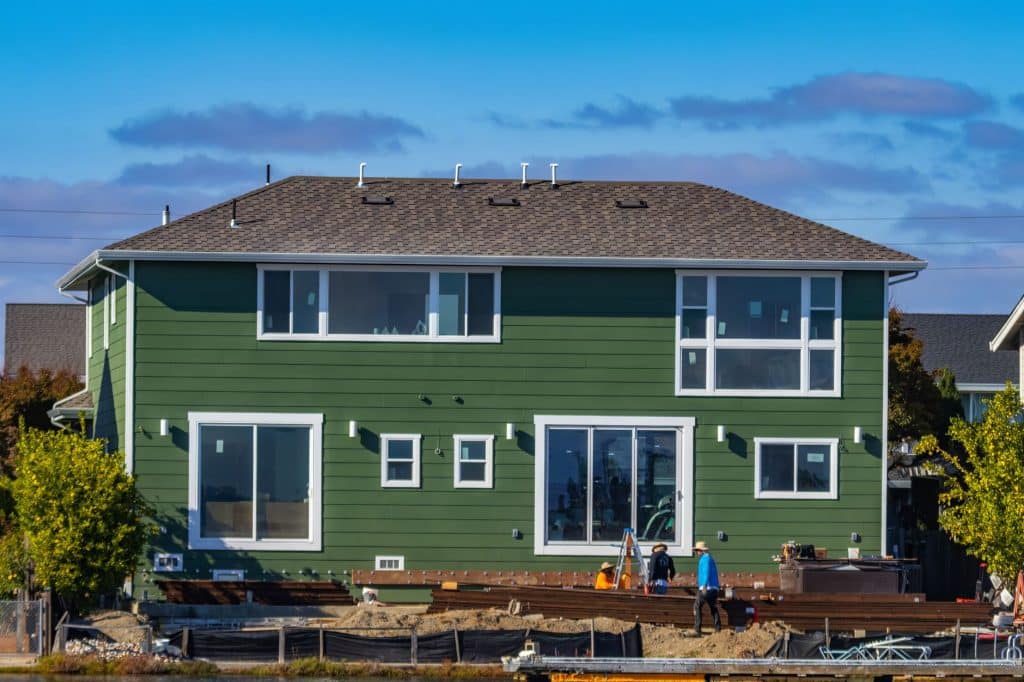
Quick Answer: Siding installation replaces the entire exterior skin of your house, not just the visible boards. A proper job removes the old material, exposes and repairs the sheathing, installs a drainage plane and flashing, then hangs the new siding on a fastening pattern rated for local wind loads. In the New Orleans metro the hidden layers do most of the work, because our failures come from trapped water far more often than from wind alone.
Homeowners across New Orleans, Metairie, and Kenner tend to shop siding the way they shop paint, by color and price per square. That’s backwards. The board you can see is the cheapest part of the assembly to get right. What sits behind it decides whether the wall is still sound in 15 years.
At a Glance
- Typical duration: 5 to 10 working days for an average single-family home, assuming no major rot.
- Weather sensitivity: high. Afternoon thunderstorms in July and August routinely cost half days.
- Permit: usually required. See our guide to siding permits in New Orleans and Jefferson Parish.
- Materials we install: all 8, from vinyl and fiber cement to stucco and brick.
- Estimates: free, call 504-882-9704.
Step 1: Tear-Off and Inspection
Crews strip the old siding down to the sheathing. This is the only moment anyone gets an honest look at the wall, so it’s worth being home for it. We’re looking for soft plywood, dark staining around windows, crumbling OSB at the base of walls, and any daylight showing through seams.
Rot around window corners and along the bottom course is the usual find on older metro homes. Water gets in through failed caulk or bad flashing, runs down inside the wall, and sits. If you’ve seen any of the signs of water damage behind siding from outside, expect to find more once the wall is open.
Why Tear-Off Beats Layering
Installing over the existing wall skips this inspection entirely. You keep whatever moisture problem you already had and add weight on top of it. There are narrow cases where layering over the existing wall works, but tear-off is the default for a reason, and our siding replacement guide explains why we start there.
Step 2: Sheathing Repair
Damaged sheathing gets cut out and replaced with new material of matching thickness, fastened to the framing. If a stud or sill plate has gone soft, that gets addressed too. This is the line item most likely to move on your final invoice, because nobody can see inside a closed wall during an estimate. A good bid says so up front and gives you a per-sheet rate rather than pretending the number is fixed.
Step 3: The Weather Barrier
This is the layer that earns its keep in South Louisiana. A house wrap or building paper goes over the sheathing, lapped shingle-style so water runs down and out rather than in. Flashing gets integrated at every window head, door, and penetration, and the wrap laps over the flashing, never under it.
Our climate makes this unforgiving. We get heavy, wind-driven rain that pushes water sideways into seams that would drain fine in a calmer climate. Humidity keeps anything that does get in from drying quickly. That combination is why moisture and humidity drive most siding failures here, and why we won’t rush this stage to make up a rain day.
Rainscreen Gaps
On some assemblies we furr the wall out to leave a drainage and drying gap behind the siding. It costs more and it’s not required on every material, but on a shaded north wall or a house under heavy oak cover in Covington or Mandeville, that gap is cheap insurance.
Step 4: Hanging the Siding
Now the visible part. Each material has its own fastening schedule, expansion allowance, and clearance rules, and they are not interchangeable. Vinyl has to hang loose enough to move with heat. Fiber cement needs specific nail placement and blind nailing at the right overlap. Get either wrong and the wall telegraphs it within a season or two, which is exactly how buckling and warping in Louisiana heat usually starts.
Fastening also has to meet the wind-load requirements that apply to your address. Those requirements are stricter in parts of the metro than people expect, and they’re written into the code for good reason. Our breakdown of wind-rated siding and Jefferson Parish codes covers what inspectors actually look at.
Step 5: Trim, Caulk, and Cleanup
Corners, window and door casings, soffit, and fascia get finished last. Sealant goes only where it belongs, which is fewer places than most people assume. Caulking the bottom edge of a lap course, for example, traps water instead of shedding it. A crew that caulks everything is telling you something about how well they understand drainage.
Final cleanup should include a magnet sweep of the yard for nails. Ask about it before work starts, especially if you have kids, dogs, or car tires you like.
What Drives the Price
Five things move a siding number more than anything else:
- Wall area and stories. Two-story work needs staging and slows everything down.
- Material. The spread between the cheapest vinyl and a premium fiber cement system is wide.
- Hidden repair. Rotten sheathing is the most common overrun.
- Trim complexity. Dormers, bays, decorative brackets, and lots of windows all add cut time.
- Access. A tight side yard in a Gretna or Uptown lot costs more to work than an open suburban lot.
For real ranges by material, see our siding replacement cost breakdown for Louisiana.
Frequently Asked Questions
How long does siding installation take in New Orleans?
Most single-family homes run 5 to 10 working days once materials arrive. Summer storms add days. A larger home, heavy trim work, or significant rot repair can push it to 3 weeks.
Can I stay in the house during installation?
Yes. It’s loud during tear-off and fastening, and you’ll want to move anything fragile off exterior walls, but the house stays livable throughout. Interior access is rarely needed.
What time of year is best for siding work here?
Fall and early spring give the most workable weather. That said, crews install year round in this climate. We walk through the tradeoffs in our post on the best season to replace siding in New Orleans.
Do I need to be home?
Not for the whole job, but try to be there at tear-off. That’s when we find whatever the old wall was hiding, and decisions about sheathing repair get made faster when you’re on site.
Will new siding help with my energy bills?
On its own, modestly. Paired with insulated products or added wall insulation during the open-wall stage, the difference is more noticeable. See insulated siding and energy bills in Louisiana.
Getting Started
If your siding is 20 years old, showing seam gaps, or came through a named storm with damage, an inspection is the right first move. We’ll open up problem areas where needed, give you an honest read on what’s behind the wall, and quote the work in writing.
Turnkey Siding runs our own crews across the New Orleans metro, from Slidell and the Northshore down through Marrero and the West Bank. See the full service area or browse recent work. Free estimates at 504-882-9704.