Written by Turnkey Siding
Key Takeaways
- Metal siding is the most durable option for New Orleans commercial buildings, lasting 40-70+ years with minimal upkeep.
- Steel and aluminum resist fire, pests, and Gulf Coast moisture far better than wood or vinyl alternatives.
- Installed cost runs higher than vinyl but stays competitive with fiber cement at commercial scale, with panel profile, gauge, and finish driving the price.
- Constant Gulf Coast humidity rusts steel wherever its protective coating fails, so specify Galvalume steel, with its aluminum-zinc coating, or coated aluminum.
- Metal siding requires only periodic washing and fastener inspection to maintain its full lifespan.
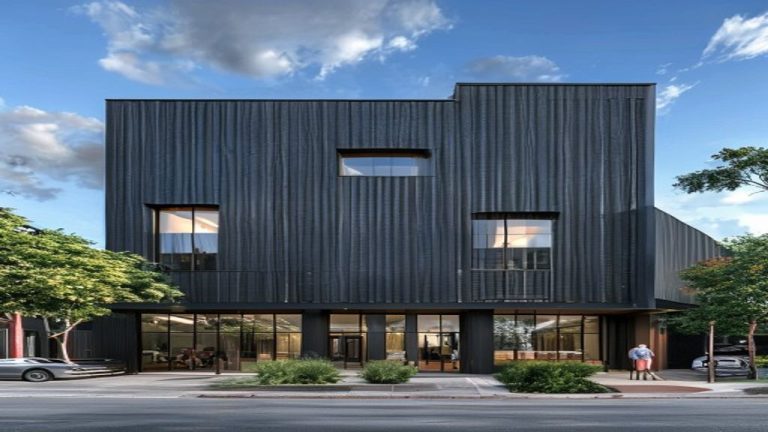
Metal Siding for Commercial Buildings: What Property Managers Need to Know
Quick Answer: Metal siding on commercial buildings typically lasts 40 to 70 years with minimal upkeep, earns Class A fire ratings that can reduce insurance premiums, and outperforms alternatives like EIFS and fiber cement in high-moisture Gulf Coast environments. Aluminum is the lowest-maintenance call because it won’t rust, while steel depends on its coating staying intact. For New Orleans owners, wind ratings, historic review downtown, and the hurricane calendar shape the spec as much as the metal does.
What Property Managers Actually Need to Weigh
Metal siding gets spec’d on commercial projects for good reasons: long service life, fire performance, and low annual maintenance costs. But the decision isn’t as simple as picking a color from a brochure. The Gulf Coast introduces variables like constant humidity, extreme heat cycling, and hurricane-force wind loads that make material selection matter more than in most of the country.
This breakdown covers the material options, what they cost relative to alternatives, how they perform against Louisiana’s climate, and what the installation process looks like for commercial work. If you manage commercial property and you’re replacing or upgrading an exterior envelope, these are the specifics you need before signing anything.
Key topics covered here:
- Steel vs. aluminum on the Gulf Coast and why it matters
- Class A fire ratings and commercial code requirements
- Cost comparison against EIFS, brick veneer, and fiber cement
- Maintenance and coating expectations over a 40-plus-year lifespan
- Impact and wind ratings relevant to New Orleans commercial work
At a Glance
- Lifespan: 40-70 years for aluminum; 30-50 years for coated steel
- Cost drivers: panel profile, gauge, finish, and building height and access
- Fire rating: Class A, which meets or exceeds most commercial building codes
- Key differentiator: Aluminum won’t rust; steel panels require protective coatings and can rust wherever that coating gets damaged
- Maintenance cycle: 20-plus years before recoating with Kynar/PVDF factory finishes
- Wind resistance: Metal panels rated for 150+ mph winds are available, which matters for post-Ida and future storm seasons
Steel vs. Aluminum: Which One Belongs on a Gulf Coast Building?
This is the question property managers near New Orleans, Metairie, or any coastal parish should ask first. Both materials perform well in most of the country. The Gulf Coast changes the math.
Steel is heavier, more rigid, and generally less expensive per panel. It handles impact well. But steel corrodes when the protective coating fails, and in a climate this humid, exposed steel stays damp long enough for rust to take hold. Once rust begins, it spreads. A steel building that goes uninspected for a few seasons can develop cosmetic and structural issues that are expensive to address.
Aluminum doesn’t rust. Period. It oxidizes on the surface, which actually creates a protective layer rather than degrading the base metal. For owners who want the lowest upkeep, aluminum is the long-term play. It costs more per square foot than comparable steel, but the reduced maintenance liability over 40-plus years justifies the premium on most commercial projects.
Steel with a high-quality PVDF coating is still a reasonable choice for many commercial properties and may offer better cost-per-panel economics, as long as the coating is inspected and kept intact. The decision comes down to budget and how much upkeep you want to take on.
Class A Fire Ratings and Why They Matter for Commercial Properties
Commercial building codes in Louisiana require exterior wall assemblies to meet specific fire performance standards. Metal siding systems from reputable manufacturers are tested and rated Class A under ASTM E84, meaning they contribute very little flame spread or smoke development in a fire event.
This matters beyond code compliance. Many commercial property insurers factor exterior wall cladding material into premium calculations. A building with a Class A-rated metal exterior envelope is a different risk profile than one clad in wood siding or non-rated EIFS. Property managers who haven’t reviewed this with their insurer are leaving potential savings on the table.
When spec’ing a commercial metal siding system, request the manufacturer’s fire test certification. The framing and sheathing assembly behind the panels also affects the system’s fire rating, so this is a conversation to have with your installer before a scope is finalized.
Cost Comparison: Metal vs. Other Commercial Cladding Options
Metal siding isn’t always the cheapest option up front. It often is the cheapest option over a 20-year maintenance horizon. Here’s how it compares:
EIFS (Exterior Insulation and Finish System): Lower initial cost than metal or brick. But EIFS requires regular inspection for cracks, and any moisture intrusion that isn’t caught early causes rot in the framing behind the system. Remediation on a moisture-compromised EIFS building is expensive. Post-Katrina New Orleans has seen a lot of EIFS failure.
Brick veneer: Long lifespan, but heavy material and masonry labor make it the most expensive of these options on commercial work. Mortar requires maintenance every 20-25 years. Heavy, which adds structural requirements to the building design. Excellent thermal mass and durability where the budget supports it.
Fiber cement: Good fire and moisture performance, lower cost than brick, but fiber cement panels on commercial buildings require repainting on a 10-15 year cycle. That maintenance burden adds up across a large building envelope.
Metal siding sits in the middle on first cost, with the best long-term maintenance profile of the common alternatives. For property managers who hold commercial assets long-term, that math generally works in metal’s favor.
Installation on Commercial Projects: What’s Different from Residential Work
Commercial metal siding installation isn’t just a bigger version of a residential job. Sequencing is different. Crew sizes are larger. Work around active tenants, loading docks, and occupied spaces requires coordination that residential work doesn’t.
A typical commercial installation starts with a site survey and measurement of the full building envelope. Panel layout gets drawn up before ordering because commercial profiles are often custom-cut to length. The moisture barrier and framing attachment system gets installed first, then panel runs are started systematically to maintain alignment across large facade areas.
For occupied commercial buildings, good installers work in phases, maintaining weather protection on sections that aren’t yet closed in. Permitting for commercial work in Louisiana parishes involves plan review and inspection stages that add lead time compared to residential permits.
Expect 2 to 6 weeks for a typical commercial siding project, depending on building size and complexity. Larger warehouse or multi-tenant retail projects can run longer.
Commercial Exteriors in New Orleans: Review and Timing
Buildings in the French Quarter and parts of downtown carry a layer of review that a suburban warehouse doesn’t. The Vieux Carré Commission regulates the preservation of buildings in the French Quarter, and the City’s Historic District Landmarks Commission staffs 2 commissions, one for New Orleans historic districts and one for the Central Business District. If your building falls under either, get their direction on panel profile and street visibility before you lock in a metal scope. Properties in Metairie, Harahan, and the rest of Jefferson Parish sit outside those city commissions, though the local permit office still sets its own review steps.
Timing matters as much as paperwork. The Atlantic hurricane season runs June 1 to November 30, and the National Hurricane Center puts most activity between mid-August and mid-October, so a phased install that leaves wall sections open is best sequenced to close the envelope before that window. June is also the wettest month at the New Orleans airport in NOAA’s 1991 to 2020 climate normals, which is worth factoring into the start date on a 2 to 6 week project.
FAQ
What metal siding profile works best on commercial buildings? Standing seam and concealed-fastener panel systems are common on commercial work because they eliminate exposed fasteners that can become leak points. Exposed-fastener corrugated profiles are lower cost and acceptable for agricultural or industrial applications where aesthetics are secondary.
Does metal siding require any special maintenance in Louisiana’s climate? Annual inspection for any panel damage, sealant checks at penetrations and transitions, and clearing debris from drainage channels covers most of it. Panels with factory Kynar (PVDF) coatings won’t need repainting for 20-plus years under normal conditions. The main maintenance liability is mechanical damage from equipment or debris.
Will metal siding hold up in a hurricane? Properly installed metal panels with the right fastening pattern and gauge can meet Miami-Dade or Texas TDI wind requirements. Specify panels rated for your wind zone and confirm the installation spec matches the tested assembly. Gauge matters, since thinner panels can fail in high-wind events.
How does metal siding affect a building’s energy performance? Metal panels alone have low R-value. Adding continuous rigid insulation behind the panel system significantly improves thermal performance. This is worth specifying on climate-controlled commercial buildings in South Louisiana where cooling loads are high year-round.
Is metal siding appropriate for historic commercial buildings in New Orleans? It depends on the district. Some historic districts restrict metal panel systems on facades visible from the street. Consult your local preservation office before specifying. Metal is often acceptable on rear or secondary facades even in restricted districts.
About Turnkey Siding: Turnkey Siding provides commercial and residential siding installation throughout New Orleans and Southeast Louisiana, specializing in metal siding systems, fiber cement, vinyl, and full exterior envelope work for property managers, developers, and homeowners.
Ready to get a commercial siding estimate? Turnkey Siding helps property managers and building owners protect their investments backed by 20-plus years of Gulf Coast installation experience.
Contact us today at 504-882-9704 to schedule your free on-site estimate.
Disclaimer: Siding work involves safety risks; consult licensed professionals for work beyond ground-level visual checks. Costs and specifications provided are estimates based on typical New Orleans market conditions and may vary based on specific project requirements and current material pricing.
Sources
- Metal Construction Association: metal siding product specifications, wind ratings, and installation standards.
- Insurance Institute for Business & Home Safety (IBHS): wind performance data for metal cladding systems in hurricane zones.
- American Galvanizers Association: corrosion protection standards for steel in coastal environments.
Related siding services: Metal Siding · All Siding Services