Written by Turnkey Siding
This article is general information about how property insurance generally treats hurricane damage in Louisiana. It isn’t legal or insurance advice, and it can’t tell you how your claim will turn out. Your policy language and the facts of your loss decide coverage. For questions about your policy, talk with your agent or the Louisiana Department of Insurance, and for legal questions, a licensed Louisiana attorney.
Key Takeaways
- In a hurricane, wind and rising water can damage the same wall, and a wind vs flood damage claim in Louisiana generally means sorting each kind of damage to the policy written for it.
- The Louisiana Department of Insurance says homeowners policies don’t cover flood damage. Flood coverage comes from a separate policy, often through the National Flood Insurance Program.
- A named storm or hurricane deductible can be a percentage of your home’s insured value, so check your declarations page before storm season.
- The NFIP’s dwelling policy form asks for a signed, sworn proof of loss within 60 days after a flood loss.
- Turnkey Siding writes detailed siding repair estimates across the metro. Call 504-882-9704.
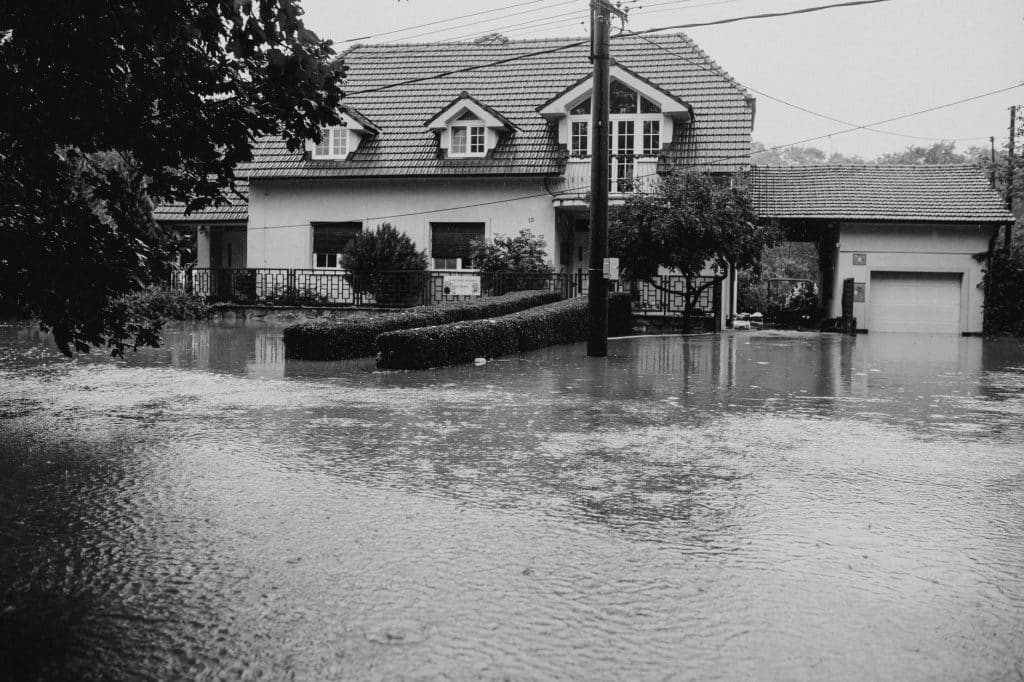
How Do Wind vs Flood Damage Claims Work in Louisiana?
Quick Answer: Wind damage to siding is generally a question for your homeowners or wind policy, under that policy’s terms. Damage from rising floodwater is generally a question for a flood policy, because the Louisiana Department of Insurance notes that homeowners policies don’t cover flood. When a storm causes both, LDI’s post-disaster guide says you may need to file with each policy you carry, and the adjusters work out which policy covers which part of the loss. Your job is to document the damage clearly and report it to each insurer.
Our June post on filing a siding insurance claim after a Louisiana storm walks through the filing steps. This post focuses on the part that gets complicated after a hurricane: the same wall with 2 kinds of damage.
What Each Type of Policy Is Built For
Homeowners and Wind Coverage
LDI’s consumer guide lists windstorm and hail among the perils covered by a basic homeowners form. It also lists what most homeowners policies don’t cover, including flood, surface water, water that backs up through sewers or drains, and earth movement. Some homeowners policies, especially for property along the coast, exclude wind and hail. LDI notes that Louisiana Citizens Property Insurance Corporation, the state’s insurer of last resort, offers that supplemental coverage, and any Louisiana licensed property and casualty producer can place it.
Flood Coverage
The NFIP’s Standard Flood Insurance Policy dwelling form covers direct physical loss by or from flood to the dwelling at the insured location. LDI’s guide notes that NFIP coverage tops out at $250,000 for the house and $100,000 for contents, with excess flood insurance available from private insurers. It also warns that a new flood policy may take 30 days to go into effect, so waiting until a storm is in the Gulf may be too late.
If you’re not sure whether your home is in a mapped flood zone, our guide to siding in a New Orleans flood zone shows how to look it up.
What Wind Damage and Flood Damage Can Look Like on Siding
Adjusters make the call, but it helps to know what you’re photographing. These are general patterns, not rules:
- Wind damage often shows up as missing or torn panels, cracked boards, lifted trim, and dents or holes from flying debris. It can appear anywhere on the wall, including high up under the eaves.
- Flood damage tends to stop at a consistent height. Look for a waterline or mud stuck to the wall, and for swollen or stained boards below that line.
- Both at once can happen on low-lying lots: panels missing up high, a waterline and swollen boards down low.
- Hidden damage behind the siding, such as wet insulation or soft sheathing, may not show until the wall is opened.
Planning for a Claim in Kenner and Gretna
Jefferson Parish covers both sides of the river, from Kenner on the east bank to Gretna on the Westbank, and homes on both sides of the river can sit in mapped flood zones. Before storm season, a few steps make a mixed wind and water claim easier to document:
- Photograph every exterior wall now. LDI recommends photos or video of the outside of your home, stored with copies away from the house.
- Find your elevation certificate. It shows how your lowest floor compares with the base flood elevation, and it helps explain where water could reach.
- Read your declarations pages. Note whether you have flood coverage and whether a named storm or hurricane deductible applies.
- Know your raised-home details. On elevated houses, skirting and lower walls take the water. Our post on siding for raised homes covers how those areas are built.
The same steps apply in Metairie and across the metro. Our hurricane season siding checklist covers what to do with the walls themselves.
Why Your Out-of-Pocket Cost Can Differ by Storm
LDI advises checking with your producer about whether your policy has a named storm or hurricane deductible. Its example: a 2 percent named storm or hurricane deductible would require you to pay up to 2 percent of your home’s insured value, instead of the usual deductible you pay for other losses. Your policy defines what triggers that deductible, so read that section before storm season.
How to Document Siding Damage After a Hurricane
LDI’s guidance on filing a claim is practical, and it applies to both policies:
- Make temporary repairs to prevent further damage, such as covering openings, and keep a list of the work plus receipts for materials.
- Don’t sign contracts or work orders until you’ve spoken with your insurance company.
- Keep a record of every call, including the person’s name and the date and time.
- Be present when the adjuster comes and ask for identification.
For siding specifically, photograph each wall from a distance and then up close. Hold a tape measure against the waterline in at least one photo. If you can store torn panels safely, keep them until the adjuster has seen them. And be careful who you hire, since storm chasers arrive fast after a hurricane. Our guide to red flags when hiring a siding company shows how to check a license.
Deadlines on the Flood Side and the Insurer Side
The NFIP’s dwelling policy form asks you to send a signed, sworn proof of loss within 60 days after the loss, and it says the insurer may, at its option, accept an adjuster’s report instead. Check your policy and any FEMA notices after a major storm for the requirements that apply to your claim.
On the homeowners side, Louisiana law at La. R.S. 22:1892 sets time periods for insurers to begin adjusting claims and to pay amounts due after receiving satisfactory proof of loss. Ask LDI or your agent about the timelines that apply to your claim.
What If You Disagree With How the Damage Was Split?
Start by asking each insurer, in writing, to explain its decision. If you still disagree on the homeowners or wind side of the claim, LDI’s Hurricane Mediation Program may be an option. It was created by Act 591 of the 2022 Regular Session and began January 1, 2023, and LDI says policyholders may request mediation after the governor declares a state of emergency for a named windstorm event, for residential property claims in the declared area with disputed amounts up to $150,000. To take part, you contact one of the mediation firms on LDI’s approved list.
You can also reach LDI at 1-800-259-5300. The department can’t act as your lawyer, so for legal questions about your claim, talk with a licensed Louisiana attorney.
Frequently Asked Questions
Does homeowners insurance cover flood damage to siding?
LDI says homeowners policies don’t cover flood damage. Flood coverage requires a separate flood policy.
Can I file a claim with both my homeowners and flood insurers?
LDI’s post-disaster guide says you may need to file with each policy you have, and the adjusters determine which policy covers which part of the loss.
Should I tear off damaged siding before the adjuster visits?
Temporary repairs to prevent further damage are generally expected, but photograph everything first and keep receipts. Talk with your insurer before signing any repair contract.
Can Turnkey Siding tell me which policy will pay?
No. Coverage decisions belong to your insurers under your policies. What we can do is inspect the siding and write a detailed repair estimate you can share with your adjusters.
Get a Written Siding Repair Estimate
After a storm, a clear, itemized estimate makes every conversation with an adjuster easier. Turnkey Siding serves Kenner, Gretna, Metairie, and the rest of the metro. Call 504-882-9704 or request an inspection online.